When it comes to improving your overall health, one of the simplest yet most powerful changes you can make is adding more high fiber foods to your diet. Fiber plays a crucial role in digestion, weight management, heart health, and even blood sugar control. Yet, many people don’t get nearly enough of it.
In this comprehensive guide, we’ll explore what fiber is, why it’s essential, and how you can easily incorporate more high fiber foods into your daily routine without sacrificing taste or convenience.
What Are High Fiber Foods?
High fiber foods are plant-based foods that contain a significant amount of dietary fiber. Fiber is a type of carbohydrate that your body cannot digest. Instead of being broken down and absorbed, it passes through your digestive system, providing numerous health benefits along the way.
There are two main types of fiber:
- Soluble fiber – dissolves in water and helps lower cholesterol and regulate blood sugar.
- Insoluble fiber – adds bulk to stool and promotes regular bowel movements.
Both types are essential, and the best approach is to consume a variety of foods that provide both.
Why Are High Fiber Foods Important?
Adding more high fiber foods to your diet can transform your health in several ways:
1. Improves Digestive Health
Fiber helps keep your digestive system running smoothly. It prevents constipation and supports a healthy gut microbiome.
2. Supports Weight Management
High fiber foods keep you full longer, reducing overall calorie intake and helping with weight control.
3. Lowers Cholesterol Levels
Soluble fiber binds to cholesterol particles and removes them from your body, reducing the risk of heart disease.
4. Regulates Blood Sugar
Fiber slows the absorption of sugar, helping to prevent spikes in blood glucose levels.
5. Reduces Risk of Chronic Diseases
A diet rich in fiber is linked to lower risks of heart disease, diabetes, and certain types of cancer.
Top High Fiber Foods You Should Include
Let’s dive into some of the best high fiber foods you can start eating today.
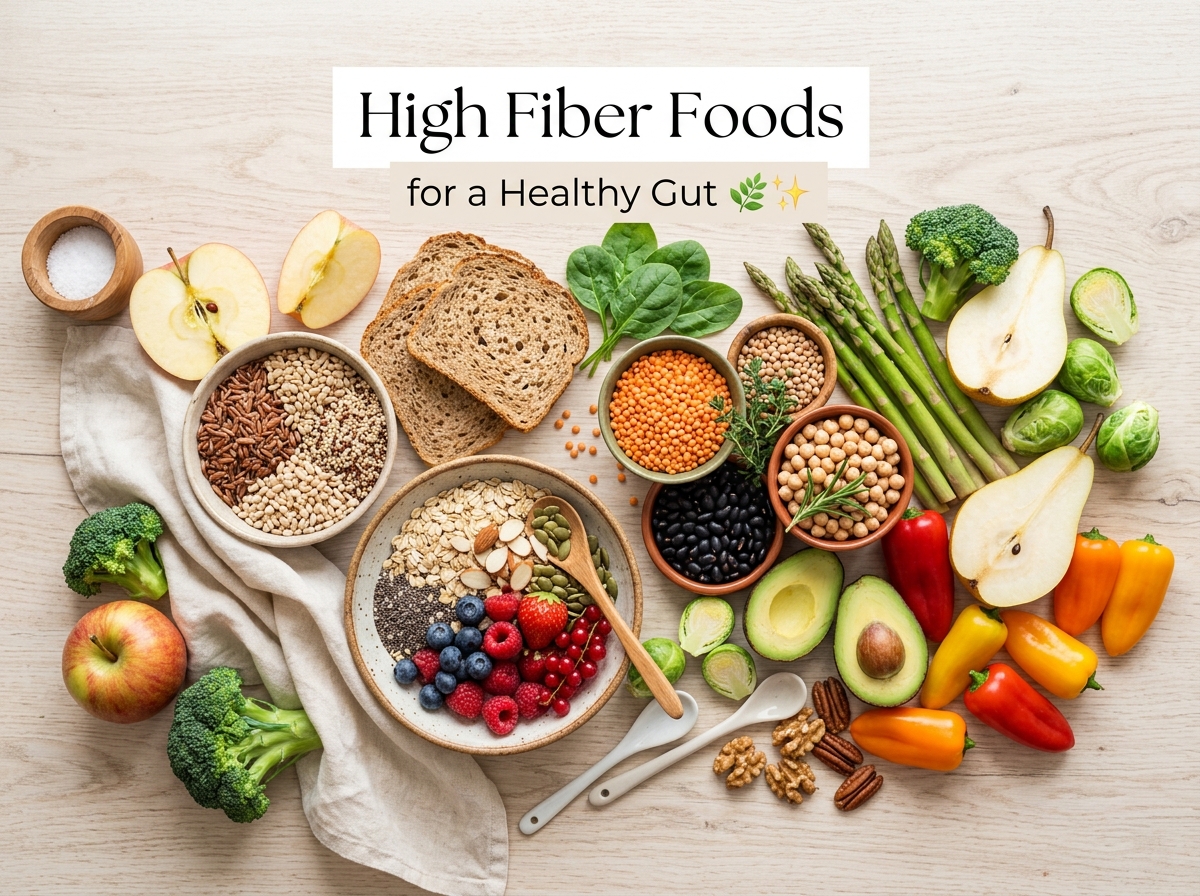
1. Whole Grains
Whole grains are one of the easiest ways to increase your fiber intake.
- Oats
- Brown rice
- Quinoa
- Whole wheat bread
Oats are especially rich in soluble fiber, making them perfect for heart health and breakfast options.
2. Legumes
Legumes are fiber powerhouses and also provide protein.
- Lentils
- Chickpeas
- Black beans
- Kidney beans
Adding lentils to soups or salads is an easy way to boost your fiber intake.
3. Fruits High in Fiber
Fruits are not only delicious but also packed with nutrients and fiber.
- Apples (with skin)
- Bananas
- Oranges
- Berries (raspberries are especially high in fiber)
These make a convenient, fiber-rich snack option for busy days.
4. Vegetables
Vegetables are essential for a balanced diet and provide both soluble and insoluble fiber.
- Broccoli
- Carrots
- Spinach
- Sweet potatoes
Perfect for smoothies when you’re short on time but still want your nutrients.
5. Nuts and Seeds
Nuts and seeds are small but mighty sources of fiber and healthy fats.
- Chia seeds
- Flaxseeds
- Almonds
- Sunflower seeds
Chia seeds can be added to yogurt, smoothies, or even water for a quick fiber boost.
How Much Fiber Do You Need Daily?
The recommended daily fiber intake varies by age and gender:
- Women: 21–25 grams per day
- Men: 30–38 grams per day
Unfortunately, most people consume far less than these recommendations. That’s why consciously adding high fiber foods is so important.
Easy Ways to Add More High Fiber Foods to Your Diet
Increasing your fiber intake doesn’t have to be complicated. Here are some simple tips:
Start Your Day with Fiber
Choose oatmeal, whole grain toast, or a smoothie with chia seeds.
Snack Smart
Swap chips for fruits, nuts, or whole grain crackers.
Add Veggies to Every Meal
Include vegetables in lunch and dinner, even if it’s just a side salad.
Choose Whole Over Refined
Replace white bread, pasta, and rice with whole-grain alternatives.
Experiment with Legumes
Add beans or lentils to soups, curries, and salads.
Sample High Fiber Meal Plan
Here’s a simple one-day meal plan rich in high fiber foods:
Breakfast:
Oatmeal topped with chia seeds and berries
Snack:
Apple with almond butter
Lunch:
Quinoa salad with chickpeas and mixed vegetables
Snack:
Handful of almonds
Dinner:
Grilled chicken with steamed broccoli and brown rice
This plan can easily provide 25–35 grams of fiber.
Common Mistakes to Avoid
While adding high fiber foods is beneficial, there are a few pitfalls to watch out for:
Increasing Fiber Too Quickly
A sudden increase can cause bloating and discomfort. Add fiber gradually.
Not Drinking Enough Water
Fiber works best when paired with adequate hydration.
Relying Only on Supplements
Whole foods provide additional nutrients that supplements lack.
Are Fiber Supplements Necessary?
While fiber supplements can help, they should not replace natural high fiber foods. Whole foods offer vitamins, minerals, and antioxidants that supplements cannot replicate.
If you struggle to meet your daily intake, supplements can be a backup—but food should always come first.
High Fiber Foods for Weight Loss
Fiber is a game-changer for weight loss. It slows digestion, reduces hunger, and stabilizes blood sugar levels.
Some of the best options include:
- Oats
- Lentils
- Apples
- Chia seeds
- Broccoli
These foods help you stay full longer, making it easier to maintain a calorie deficit without feeling deprived.
High Fiber Foods for Gut Health
Your gut microbiome thrives on fiber. Foods like fruits, vegetables, and whole grains act as prebiotics, feeding the beneficial bacteria in your digestive system.
A healthy gut can improve:
- Digestion
- Immunity
- Mood
- Nutrient absorption
Final Thoughts
Incorporating more high fiber foods into your daily diet is one of the most effective ways to improve your health naturally. From better digestion to heart health and weight management, the benefits are undeniable.
Start small, stay consistent, and focus on whole, nutrient-rich foods. Whether it’s adding oats to your breakfast or snacking on fruits and nuts, every step counts.